
Most Camps Get Camp Email Marketing Wrong
Camp email marketing at most organizations is scattered. There's no rhythm. No plan.
Someone on staff remembers to send a registration blast in February, maybe a fundraising ask in November, and a packing list in May. In between? Silence. And when an email does go out, it's rushed, inconsistent, and almost always asking for something.
As a result, your audience never knows when to expect you, doesn't recognize your voice when you do show up, and has no reason to open the next one. Every email feels like it's starting from scratch because, honestly, it is.
And it's not for lack of caring. Most camp and retreat center teams are stretched thin. As a result, email falls to whoever has a free hour, the messaging changes tone depending on who writes it, and there's no clear camp email marketing strategy connecting one send to the next. It's not that the emails are bad. It's that there's no framework holding them together.
But here's the thing. The camps and retreat centers that consistently fill spots, book groups, and build loyalty aren't sending more emails. They're sending better-timed, value-first emails with a clear plan behind them. One email a month. Twelve months a year. Each one with a specific purpose tied to what's actually happening in the life of their organization.
So by the time any registration or booking window opens, their audience is already engaged, already excited, and already expecting to hear from them. Because of that, the email isn't a cold pitch. It's the next step in a conversation that's been going on for months.
That's exactly what this post gives you. A month-by-month camp email marketing framework that brings consistency and purpose to every send. You'll know what to send, when to send it, and what to say, whether you're filling summer camp spots, booking retreat weekends, or staying connected with your broader community year-round.
Why Camp Email Marketing Still Outperforms Social Media
Before we jump into the framework, however, here's something worth knowing. Email is still the highest-converting marketing channel for the demographics that camps and retreat centers serve. It outperforms social media. It beats paid ads. And it's the one channel where you truly own the relationship. Your Facebook reach can disappear overnight. Your email list? That's yours forever.
Of course, there's a catch. Email only works when people actually open it. And people only open emails from senders they trust and look forward to hearing from. That's why consistency is so important. When you show up in someone's inbox once a month with something genuinely valuable, you train them to watch for your name. You become a welcome guest instead of an interruption.
This applies to every audience your camp serves. Parents deciding on summer camp. Youth directors choosing a retreat venue. Team leaders planning their fall getaway. Organizations looking for a place to take their staff. They all check email. And they all respond to organizations that show up consistently with something worth reading.
Stop Guessing What Goes in Your Camp Emails
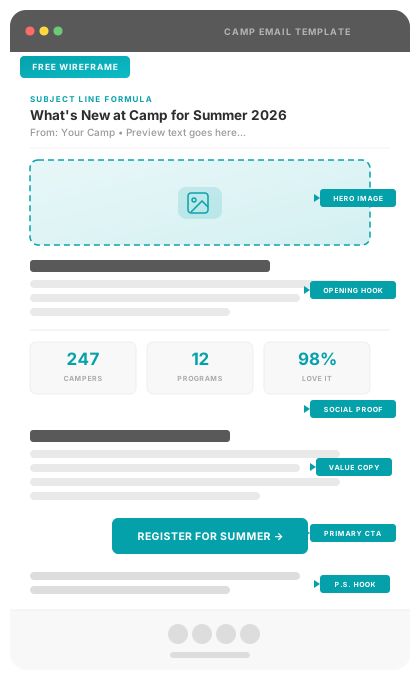
Our FREE wireframe guide gives you an annotated email layout with every section labeled,
plus subject line formulas and CTA's built specifically for camps.
The 12-Month Camp Email Marketing Framework
Here's your month-by-month camp email marketing breakdown of what to send and why. Each email has a clear purpose matched to what's actually happening at your camp or retreat center that month.
Some months call for a focused, single-topic email — like a registration push or event announcement. Other months, your newsletter is the right format: a touchpoint that covers two or three updates to keep your community connected. The key is knowing which approach fits the moment. We'll show you both throughout the framework below.
The best part? You don't need fancy software to pull this off. You just need a plan and the commitment to send one email a month.
Fall: Celebrate and Activate (September to November)
SEPTEMBER
"The Summer Recap"
At this point, summer just ended and your community is still riding that emotional high. This is your chance to celebrate what just happened and point people toward what's next.
Start with highlights. A few standout photos. A fun stat or two, like how many campers you served, how many s'mores got eaten, or how many miles the group hiked. Wrap it up with a heartfelt thank-you to the families who made it all possible.
After that, pivot. Let your audience know what's coming this fall. Fall retreats, weekend events, group booking availability, a men's or women's retreat, team-building getaways. Whatever your fall calendar looks like, this email is where you announce it. For many camps and retreat centers, fall is one of the busiest booking seasons of the year. Don't let it sneak up on your audience.
The job of this email: celebrate summer and make sure your fall calendar is on everyone's radar.
OCTOBER
"Behind the Scenes"
Surprisingly, this one really works. Most of your audience doesn't think about your facility between events. This email changes that.
Give them a peek behind the curtain. Show them what your team is working on. Maybe you're planning a brand new summer program, renovating a lodge, adding a challenge course, or preparing for your biggest retreat weekend of the year. You don't need every detail finalized. In fact, the "work in progress" feel actually makes it more authentic and relatable.
Additionally, this is a great time to spotlight an upcoming retreat or event that still has availability. Feature it naturally within the behind-the-scenes story. Something like: "While we're getting the lodge ready for winter, we're also putting the finishing touches on our November women's retreat. A few spots are still open."
The job of this email: keep your camp top of mind and drive bookings for upcoming events.
NOVEMBER
"Gratitude"
Let's be clear about this one. This is not a fundraising email wearing a thank-you costume. This is just a genuine, heartfelt thank-you.
Write a short note from the director. Thank your entire camp community by name if you can. Summer camp families, retreat guests, group leaders, donors, staff, and volunteers. Be specific about what you're grateful for.
If you're planning a year-end giving campaign in December, this email is what builds the goodwill that makes that future ask feel natural and welcome instead of forced.
If you have winter events or holiday programming on the calendar, you can mention them briefly. But keep the spotlight on gratitude.
The job of this email: build trust and relational equity with your entire community before you ever need it.
Winter: Connect and Cast Vision (December to January)
DECEMBER
"The Year in Review"
Keep this one light and easy. Your audience is busy with the holidays and doesn't have bandwidth for a long read. A short visual recap of the year works perfectly here. Think three or four highlights across everything your organization did that year: summer camp, fall retreats, special events, facility improvements, community impact.
Consequently, this is where camps that operate year-round have a real advantage. You're not just recapping one summer. You're showing the breadth of what happened at your facility across all four seasons. That's a powerful story.
If you want to include a giving opportunity, tuck it at the very bottom as a soft PS. Don't make it the main event. The real purpose of this email is connection.
The job of this email: close the year by showing the full scope of your organization and naturally set up your January email.
JANUARY
"Here's What's Coming"
January carries that fresh-start energy, and your audience is already planning their year. Families are thinking about summer. Group leaders are mapping out their retreat calendar. Event planners are booking venues.
This is your big-picture email. Share everything worth getting excited about for the year ahead. Summer camp dates and themes. Spring and fall retreat availability. New programs. Facility upgrades. Staff hires. Give people a reason to mark their calendars now.
If you segment your email list, this is a great month to send two versions: one focused on summer camp families, and one focused on group leaders and booking contacts. Same energy, different details.
The job of this email: build anticipation across every audience you serve and get them planning early.
Spring: Activate and Enroll (February to April)
FEBRUARY
"Registration is Open"
This is the one email most camps already send. But here's the difference. After five months of consistent camp email marketing, this email lands in an inbox that's warm. Not cold.
Keep it clean and focused. One clear announcement. One link. One call to action. Don't bury the registration button under three paragraphs of text.
The families who've been reading your emails since September already know why they love your camp. They don't need to be convinced again. They just need the link.
If your retreat center also opens spring booking around this time, include a secondary section below the summer camp CTA. Something like: "Planning a spring retreat? We still have weekends available in April and May." One email, two audiences, but summer camp registration gets top billing.
The job of this email: make it as easy as possible for families to say yes, and remind group leaders that spring booking is open.
MARCH
"The Spotlight"
One of the most common mistakes in camp email marketing is cramming every program, age group, and session into a single email. It's overwhelming. People see a wall of options and they freeze.
Instead of overwhelming people, try spotlighting just one offering per email. This could be a specific summer camp program, a popular retreat format, or an upcoming event. What makes it special? Who is it perfect for? What will participants actually experience? Include a real photo from a past session and a direct registration or booking link.
This approach works whether you're highlighting your adventure camp for teens, your women's fall retreat, or your family camp weekend. One spotlight. One story. One clear next step.
The job of this email: turn interest into action by making the decision feel smaller.
APRIL
"Social Proof"
When it comes to camp email marketing, social proof is the most powerful tool you have for convincing someone who's on the fence. A real testimonial from someone who's been in their shoes will do more than any marketing copy ever could.
For summer camp, that might be a parent who was nervous about sending their kid for the first time. On the retreat side, it might be a youth director who brought their group and watched something transformative happen. And for events, it could be a team leader who planned their weekend with you and saw their group come alive.
So share a short story, a quote, or a quick Q&A. Above all, keep it raw and real, because overly polished testimonials feel manufactured. But a parent saying "my daughter didn't want to go and now she's counting the days" or a group leader saying "we've booked our fall retreat here for the last four years and we're never going anywhere else"? That's worth more than any tagline you could write.
The job of this email: let someone else make the case for your camp.
Summer: Prepare and Experience (May to August)
MAY
"Getting Ready"
Your summer camp families are in full logistics mode. New families especially are dealing with a lot of nerves. What should they pack? What should they expect? What if their child gets homesick?
This email is pure service. Give them packing tips, first-timer FAQs, a peek at what a typical day looks like, and reassurance that your staff is trained and ready.
Your goal is to calm the nerves for new families while building excitement for returning ones. Make sure you link to relevant pages on your camp website to drive traffic exactly where you want it.
Meanwhile, for the rest of your audience, this is also a great time to preview your fall calendar. Group leaders and event coordinators are planning now for September through November. A simple line at the bottom like "Already thinking about fall? Our retreat calendar is filling up. See what's available." keeps the year-round rhythm going even while summer takes center stage.
The job of this email: help families feel prepared and confident while keeping fall bookings on your audience's radar.
JUNE & JULY
"Live from Camp"
Summer is here. Keep these emails short and sweet. Parents just want to know their kid is having the time of their life.
A few photos from the week. A one-line highlight. Maybe a short quote from a camper or a counselor. That's all you need. Don't overthink it or over-design it. The rawness is actually what makes it special. A quick email that feels like a postcard from camp is far more powerful than a perfectly polished newsletter.
Send these weekly or every two weeks while sessions are running. They're short enough to write in about fifteen minutes, and they're some of the easiest camp email marketing you'll ever do.
Furthermore, if you're hosting any summer events, family camps, or group retreats alongside your camper sessions, weave those in too. A quick photo from a family camp weekend or a group retreat on the lake adds variety and shows the full life of your facility.
The job of this email: share the magic as it's happening, across everything your camp is doing.
AUGUST
"What's Next"
Summer is wrapping up and this email closes the loop beautifully.
Thank families for trusting you with their kids. Share a link to a photo gallery. Include one or two of your favorite moments from the summer. Then plant a small seed for next year: "We'd love to see your camper back next summer. Stay tuned for dates and details this fall."
But don't stop there. In addition, August is the perfect time to launch your fall season. If you have retreats, events, or group availability coming up in September through November, feature them here. Your audience is already in an emotional, connected place after a great summer. Use that momentum. "Fall is one of the most beautiful times to be at camp. Here's what's coming up."
The job of this email: end the summer on a high note and transition seamlessly into your fall season.
5 Camp Email Tips That Make Every Send Better
The framework above tells you what to send. Now here are five camp email marketing tips that will help you send it well.
1. Know the difference between a newsletter and an action email.
Your monthly touchpoint newsletters, like your September recap or October behind-the-scenes update, can cover two or three topics with links to learn more about each one. That's the right format for staying connected. But when your email has one specific job (register for summer, RSVP to an event, donate by a deadline) strip it down. One message. One call to action. One clear next step. The camps that consistently convert don't use the same format for every send. They match the email structure to the goal.
2. Lead with what matters most.
Whether your email covers one topic or three, the most important item always goes first. Put your primary call to action above the fold where it's impossible to miss. Secondary items go below, visually distinct and clearly secondary. If everything competes for equal attention, nothing wins.
3. Write like a real person.
Not a brand. Not a committee. A real, warm human being. Use first person. Sign it from the director. Write the way you'd actually talk to a parent during pickup or a group leader over coffee. Conversational always wins over corporate.
4. Use real photos from your camp.
Not stock images. Not over-designed graphics. A real, authentic photo from your camp or retreat center, even if it's a little imperfect, communicates more trust and warmth than any polished design ever could.
5. Put real effort into your subject line.
If they don't open the email, nothing else matters. Use curiosity, be specific, or try personalization. For example, something like "What's new at [Camp Name] for 2026" will always outperform "January Newsletter." Similarly, for retreat audiences, "Your fall getaway just got an upgrade" beats "Fall Retreat Info" every time.
Start Your Camp Email Marketing Plan Today
You absolutely don't need to build all twelve emails right now. Just start with the next month on the calendar and commit to sending one email a month for the next three months. That's it. Three emails.
That's the foundation of great camp email marketing. Set aside one afternoon to plan them out. Pick the topic for each month, draft a subject line, and write a one-line summary of what you want to say. When it's actually time to write each email, you'll already know what it's about. As a result, the blank page won't feel so blank anymore.
Broaden Your List, Not Just Your Schedule
One more thing. If you've been thinking of your email list as just "camp families," now is the time to broaden that. Your retreat guests, group leaders, event attendees, and donors all belong on your list.
Some camps maintain one list and use tags to segment. Others keep separate lists. Either way, the goal is the same: show up consistently for everyone your organization serves, not just the families who come in June.
Get a Head Start With Our Free Wireframe
And if you want a real head start, grab our free wireframe guide. It walks you through an annotated email layout where every section is labeled with what it does and why. You'll also get subject line formulas and CTA examples built specifically for camp and retreat center emails.
Get Our FREE Camp Email Wireframe Guide
Our FREE wireframe guide gives you an annotated email layout with every section labeled,
plus subject line formulas and CTA's built specifically for camps.
Need Help With Your Camp Email Marketing Strategy?
Email marketing is one of the core services we offer at Tic Tac Toe Marketing for Camps. Whether you need help building a year-round email rhythm, writing the copy, segmenting your list for different audiences, or setting up automations, we'd love to chat.
Tic Tac Toe Marketing for Camps is a specialized marketing agency for summer camps and retreat centers.
We provide strategy, messaging, websites, email, social media, and print marketing built around the unique needs of camp and retreat center organizations.